
Cyriacks Environmental Consulting Services, Inc. (CECOS) was formed in 2003 to provide public and private sector clients with high quality, professional environmental and ecological consulting services. Selected Palm Beach County DBE Firm of the Year (2017)
Services Wildlife Studies
Florida is home to over 130 federal and state-listed wildlife species. These species have been designated endangered, threatened, or of special concern due to habitat loss, exotic predation/disease, or natural causes. CECOS has a seasoned team of professionals highly experienced in performing wildlife surveys and habitat evaluations, U.S. Fish and Wildlife Service (USFWS) Section 7 and Section 10 consultations, permitting, mitigation and monitoring for both private and public sector projects. We have prepared Endangered Species Biological Assessments (ESBA’s) and obtained concurrence from USFWS for many large-scale infrastructure projects.
CECOS’ staff have a thorough understanding of state and federal regulatory requirements for each species, and also have an excellent rapport with USFWS and Florida Fish and Wildlife Conservation Commission (FWC) staff, enabling permits to be issued in a timely and cost-effective manner. CECOS employs an efficient and thorough approach to wildlife surveying and monitoring projects that involves research, habitat analysis, mapping, field identification, documentation and agency coordination. State-of-the-art GIS and GPS technologies are employed to ensure field data is organized and readily available for required reporting and other queries. We have also developed and implemented methodology to identify wildlife crossing locations for roadway projects and develop mitigation measures to reduce impact to wildlife species.
CECOS scientists have conducted surveys and monitoring including, but not limited to, the following state and federal protected species:
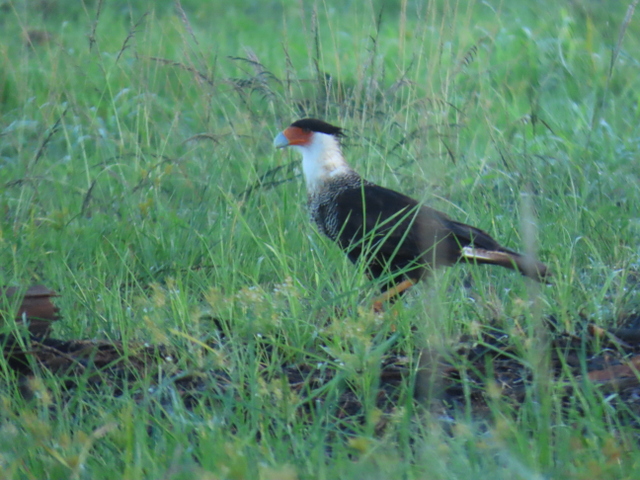
- Audubon’s crested caracara
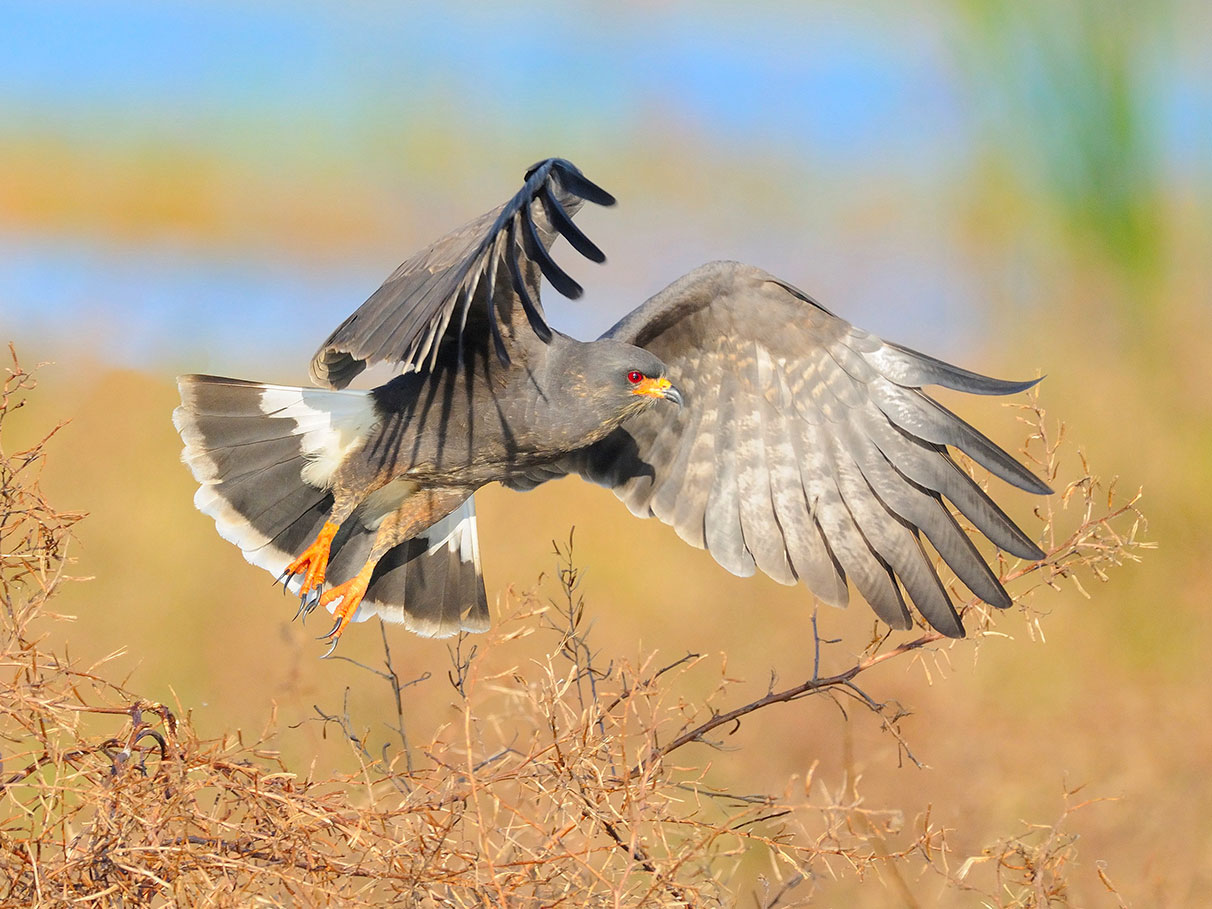
- Everglade snail kite
- Florida scrub jay
- Red-cockaded woodpecker
- Wood stork
- Piping plover
- Bald eagle
- Florida bonneted bat
- Florida panther
- West Indian manatee
- Eastern indigo snake
- Florida burrowing owl
- Gopher tortoise
- Sandhill crane
- Key Largo woodrat
- Key Largo cotton mouse
- Florida Key deer
- Florida Key deer
- Migratory birds
- Coastal plant species
- Pine rockland plant species
- Johnson’s seagrass
- Corals
See our projects below:
Description of Work:
The main construction components of this US Army Corps of Engineers (USACE) project involved demolition and removal of the existing Culvert C-6 and the construction of a new water control structure (S-267) at the same location. The demolition and reconstruction efforts required the lakeside installation of an earthen cofferdam and a steel sheet pile cofferdam at the landside in order to dewater the construction site. The structure included cast-in-place reinforced concrete foundations, headwalls, and culvert. A slide gate was installed at the lakeside headwall. S-267 consists of one (1) 10-foot diameter culvert with an approximate barrel length of 136 feet. A midspan cutoff wall was installed in the centerline of the embankment. The embankment was reconstructed to approximately match the existing crest elevation of the dike. Riprap was also installed along the lakeside embankment faces, and a control building installed on the landside work platform.
SEE MORE
SEE MORE
Description of Work:
The Brighton and Big Cypress Seminole Indian Reservations comprise nearly 90,000 acres. Large portions are undeveloped lands that are ideal for the establishment or expansion of invasive or non-native amphibians and reptiles. The Tribe wanted to know whether established or expanding populations of non-native or invasive species are present on reservation lands, particularly the invasive constrictor snakes and the Cuban tree frog. CECOS was selected to conduct a wet season baseline survey to estimate the numbers of native and non-native species and their extent. A secondary task was to prepare a Standard Operating Procedures Manual to provide staff training in various sampling methods, including identification of amphibians and reptiles, the deployment of commonly used trapping techniques, and safe handling techniques.
SEE MORE
SEE MORE
Description of Work:
Wood stork nesting colonies are located throughout southern Florida and adult storks often feed (themselves and their nestlings) along road sides or stormwater ponds, suggesting roadway corridors can provide feeding habitat. Alternatively, their presence suggests there are at least some wood storks that do not require optimal foraging conditions. Some roadways seem to have more wood storks than others, which could indicate the surrounding landscape affects corridor use. These questions are important to the Florida Department of Transportation (FDOT) because under Section 404 of the Clean Water Act, the FDOT is required to evaluate and mitigate for wetland habitat impacts due to roadway improvements. These improvements often affect natural wetlands or existing drainage features within the right of way or in adjacent lands that need to be acquired. In addition, additional wood stork foraging habitat mitigation is often required under Section 7 of the Endangered Species Act. Thus, an accurate estimate of prey items produced in roadway corridors and surrounding wetlands is critical when mitigation requires that “…habitat compensation replaces the foraging value matching the hydroperiod [length of time a wetland remains inundated] of the wetlands affected and provides foraging value similar to, or higher than, that of impacted wetlands” as specified in guidelines of section 404 of the Clean Water Act.
SEE MORE
SEE MORE
Description of Work:
The main construction components of this project involved the replacement of one-mile of Tamiami Trail (SR 90/US-41) with a bridge and the removal of this portion of the roadway. This will allow improved fresh water flows southward into Everglades National Park (ENP). Construction activities also included raising and reinforcing an additional 9.7 miles of Tamiami Trail, allowing higher water levels in the adjacent L-29 Canal. Higher water levels in the canal will increase flows into the ENP when water is needed most. The bridge and roadway modifications will supply much needed water to imperiled wildlife and vegetation in the ENP and will result in ecosystem restoration benefits to the greater Everglades. CECOS primary responsibilities included environmental documentation, water quality monitoring, and wildlife monitoring (nesting wood storks and snail kites, manatee, eastern indigo snake, gopher tortoise and Everglade mink, among other protected species). CECOS staff coordinated extensively with US Army Corps of Engineers, US Fish & Wildlife Service, Florida Department of Environmental Protection and ENP to allow construction activities within sensitive and restricted areas. CECOS was responsible to determine if nesting activities from protected species are occurring within the 10.7 miles corridor and conducted noise studies to determine if certain construction activities would impact nesting bird behavior. Turbidity monitoring was a key monitoring task, because elevated NTU levels in the ENP could shut down construction activities. CECOS worked with the contractor, USACE, ENP and FDEP to establish monitoring protocols to help expedite construction activities. Our field biologist worked proactively with the contractor to try to avoid exceedance of authorized limits. FDEP was very pleased with the environmental monitoring associated with this major construction project.
SEE MORE
SEE MORE


You can enable/disable right click